Basic Cloud Deployment Workflow
Summary
This note is a simple workflow for approaching a small cloud deployment in a controlled way. The goal is to keep deployment, validation, visibility, and rollback thinking connected instead of treating deployment as only a provisioning step.
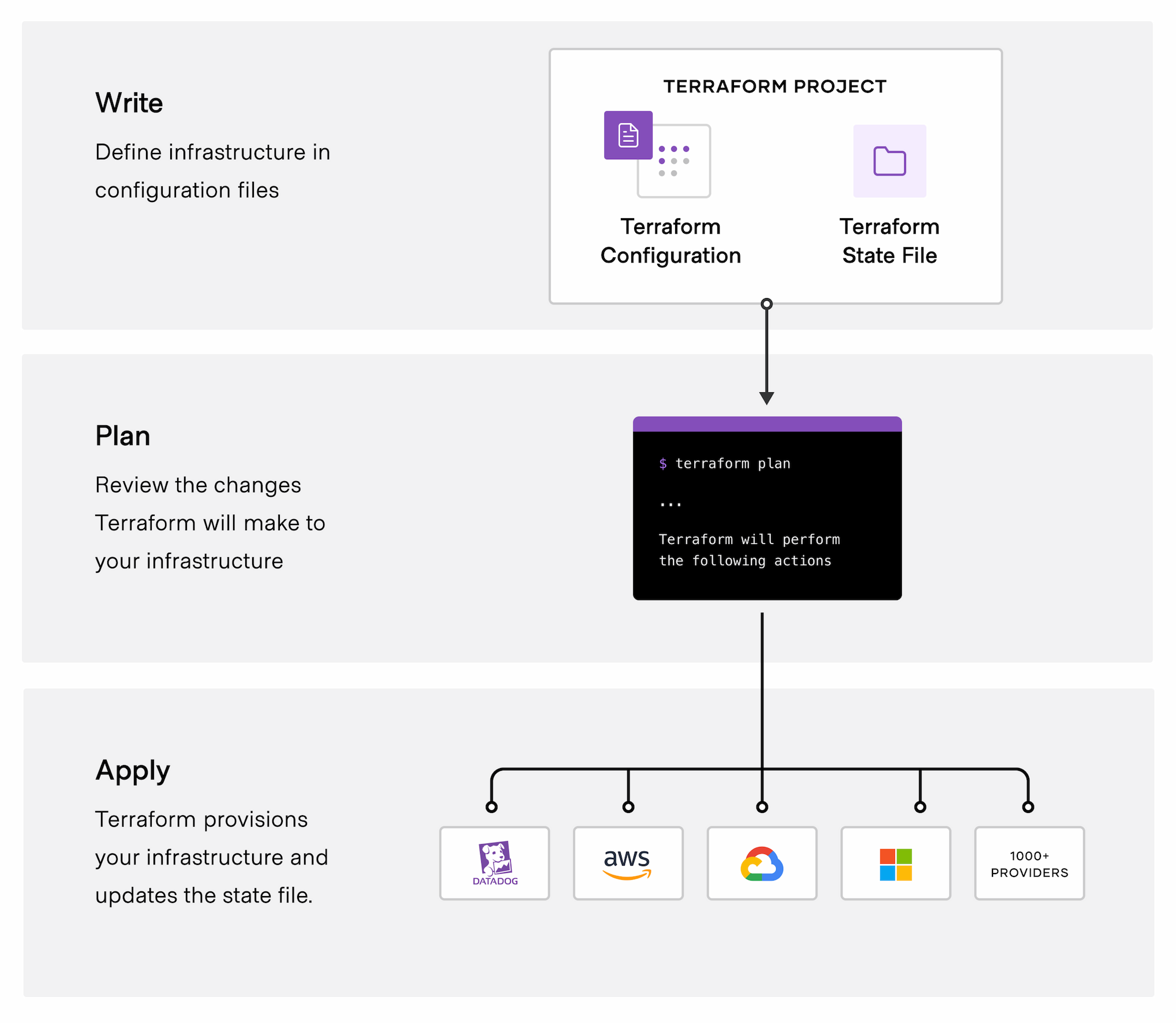
Official Terraform diagram showing the plan, apply, and automation-oriented workflow behind a repeatable deployment process.
Why this matters
- cloud work is easier when the deployment process is repeatable and explainable
- many early mistakes come from focusing only on creation, not on validation and safe change
- this workflow supports labs, portfolio projects, and junior cloud thinking
Environment / Scope
| Item | Value |
|---|---|
| Topic | first-pass cloud deployment workflow |
| Best use for this note | small cloud and IaC-based deployments |
| Main focus | plan, deploy, validate, observe |
| Safe to practise? | yes, with spend awareness |
Key concepts
- clarify what should be deployed before touching the platform
- prefer repeatable changes over portal memory
- validate and observe after deployment, not only before
Steps / Workflow
1. Define the intended outcome
Ask:
- what resource or app should exist?
- what should success look like?
- what should be observable after deployment?
2. Check identity, permissions, and scope
Confirm:
- which identity is performing the deployment
- whether access is sufficient but not broader than necessary
- which environment is being changed
3. Review the planned change
Prefer a plan-oriented step that helps you inspect:
- what will be created
- what will be changed
- what could be destroyed accidentally
4. Deploy in a controlled way
Make one meaningful change set at a time so the outcome stays understandable.
5. Validate the result
Check:
- resource exists as expected
- app or endpoint responds
- role or access assumptions still make sense
6. Review logs and monitoring
Confirm that:
- logs exist
- failures would be visible
- basic operational evidence is available
Commands / Examples
| Check | Why it helps |
|---|---|
| plan before apply | makes change intent visible |
| validate runtime response | confirms deployment means usable service |
| review logs after deployment | proves operational visibility exists |
| record rollback or teardown thinking | reduces later risk |
Verification
| Check | Expected result |
|---|---|
| Change intent is clear | deployment is understandable before apply |
| Deployment succeeds | resources are created or updated correctly |
| Runtime is validated | app or service behaves as expected |
| Visibility exists | logs and monitoring support later troubleshooting |
Pitfalls / Troubleshooting
| Problem | Likely cause | What to check |
|---|---|---|
| Resource exists but app still fails | runtime or IAM issue | validation and logs |
| Deployment works once but is hard to repeat | weak IaC or manual steps | repeatability path |
| Cloud change feels risky | no plan or rollback thinking | scope and intended delta |
| Troubleshooting starts blind | logging or monitoring skipped | operational visibility |
Key takeaways
- deployment should be treated as a workflow, not just a create step
- validation and logging are part of the deployment process
- safe cloud habits come from controlled changes and clear visibility